
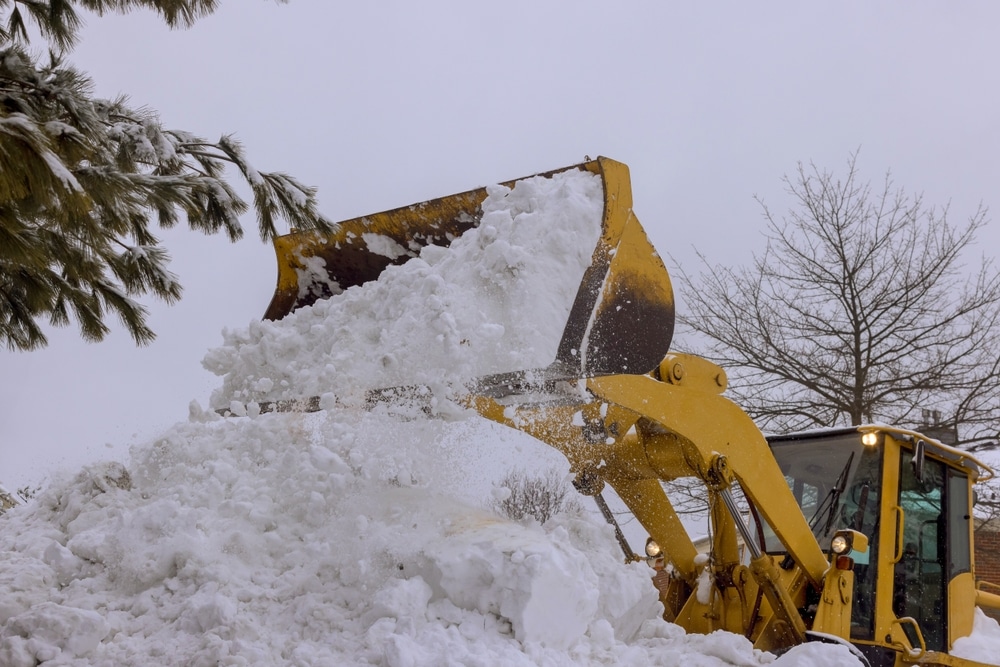
Road Salt and Snow-Pile Runoff Controlling Ice After the Storm
Post-storm ice control does not end when the plow leaves the lot. For landscaping professionals and contractors, the most persistent slip hazards often come from melting snow piles that release water during the day, send runoff across paved surfaces, and refreeze after temperatures drop. A strong snow and ice management plan treats snow storage, drainage, and targeted road salt application as one connected system.
Why does ice keep forming after the storm?
Ice keeps forming after the storm because snow piles continue to melt long after active precipitation stops. Sun exposure, building heat, vehicle traffic, and daytime temperature swings can turn stored snow into steady runoff, even when the rest of the site looks clear. That water moves across parking lots, sidewalks, catch basins, loading areas, curb lines, ramps, and pedestrian routes before refreezing into thin, hard-to-see ice when pavement temperatures fall.
For contractors, this is where liability and service quality often separate basic plowing from professional snow and ice management. A lot may be clean at 8 a.m., but if a snow pile drains across a shaded entrance at 2 p.m. and freezes by 6 p.m., the site has developed a new hazard. The issue is not simply lack of salt; it is a site-flow problem that needs to be anticipated.
How snow-pile runoff moves through a site
Melting snow follows grade, pavement depressions, curb cuts, wheel ruts, and compacted travel lanes. On parking lots, runoff may sheet across drive aisles or collect in low spots where tires spread it into a wider slick zone. On sidewalks, even a narrow stream from a nearby pile can cross an accessible route, freeze overnight, and create a recurring hazard in the same place for days.
Catch basins can help, but only when they are open, visible, and not blocked by plowed snow, slush, leaves, or compacted ice. If a snow pile is placed uphill from a basin, meltwater may carry sediment and debris toward the grate, clogging it just when drainage is most needed. If the basin is buried inside the snow pile, water often bypasses it and travels to the next low point.
Loading areas add another layer of complexity. Dock aprons, overhead door thresholds, forklift paths, and delivery lanes are often exposed to constant traffic and shade from buildings or trailers. Meltwater from snow stacked along the edge of a loading zone can run across these work areas, refreeze in thin layers, and reduce traction for both pedestrians and equipment. Contractors should evaluate not only where snow can be stored, but where meltwater will travel after storage.
Strategic snow pile placement reduces repeat icing
The most effective ice control often starts before road salt or other de-icing products are applied. Snow piles should be placed where meltwater can drain away from entrances, accessible routes, loading docks, stairways, ramps, fire lanes, and high-traffic pedestrian crossings. When possible, store snow downhill from critical movement areas, not above them.
Good snow storage planning also accounts for sun, shade, and freeze timing. A pile in full sun may release large amounts of water during the day. If that water crosses a shaded sidewalk, north-facing curb line, or building shadow, it may refreeze faster than surrounding pavement. Landscaping contractors who already understand grading, drainage, and site conditions can use that knowledge to choose snow placement zones that support safer runoff behavior.
Practical placement guidelines include:
- Keep snow piles away from building entrances, sidewalk crossings, disability and emergency routes.
- Avoid stacking snow directly on or around catch basins unless drainage is intentionally preserved.
- Do not place piles uphill from loading docks, dumpster pads, or employee walkways.
- Leave meltwater channels open so runoff can reach drainage structures instead of spreading across traffic areas.
- Reassess pile locations after large events, because available storage areas shrink as the season progresses.
Drainage monitoring is part of professional site service
Monitoring drainage after a storm helps contractors identify where runoff is active and where ice is likely to return. This does not require complicated tools; it requires consistent observation, documentation, and follow-up. The best time to inspect is during active melt periods, often late morning through afternoon, and again before evening refreeze.
Crews should look for wet pavement trails extending from snow piles, ponding near catch basins, slush ridges along curbs, and shiny pavement in shaded areas. They should also note whether runoff is reaching a drain or being diverted by snow berms, compacted slush, or uneven pavement. Photos, site maps, and service notes can help document recurring runoff zones and guide future applications.
A simple monitoring checklist can improve consistency:
- Identify all major snow storage areas after plowing.
- Walk or drive the expected runoff path during thaw conditions.
- Check parking lots, sidewalks, catch basins, loading areas, curb lines, and entry points.
- Mark areas where water repeatedly crosses pedestrian or vehicle routes.
- Confirm whether drains are open, blocked, buried, or overwhelmed.
- Schedule targeted treatment before temperatures fall below freezing.
This kind of monitoring supports better operational decisions. It also helps avoid the costly habit of treating an entire site heavily when only a few runoff corridors are creating repeat ice.
Where should road salt be applied after runoff appears?
Road salt should be applied where runoff is likely to refreeze, not automatically across every paved surface. For recurring runoff zones, the best approach is targeted application on the water path, the collection point, and the downstream area where ice typically forms. This keeps material focused where it can reduce bonding and improve traction.
Contractors using bulk salt should calibrate spreaders and train operators to adjust application by pavement condition, temperature, and site priority. Wet pavement that is still draining may need follow-up service, because moving water can dilute or carry away material before refreeze. In these areas, timing matters: applying too early may waste product, while applying too late may allow ice to bond tightly to the surface.
De-icing products should also be matched to the site conditions and service expectations. Road de-icing is not only about melting existing ice; it is about interrupting the freeze-bond cycle that makes runoff hazards difficult to remove later. Where runoff repeats daily, contractors may need a combination of clearing channels, opening drains, relocating snow, and applying salt with precision.
Balancing performance, cost, and site impact
Professional snow and ice management requires balancing safety, material use, budgets, and landscape protection. Over-application of salt can increase costs and may affect turf, planting beds, soils, and nearby hardscape surfaces. Under-application, however, can leave hazardous refreeze conditions that damage client trust and increase exposure.
The goal is not simply to use more material. It is to understand where ice is forming and why. When crews connect runoff patterns to pile placement, drainage, and temperature changes, they can choose smarter treatments and communicate more clearly with property managers.
For landscaping contractors, this is a natural extension of site expertise. You already read grade, drainage, traffic patterns, and plant-sensitive zones during the growing season. In winter, those same skills help determine where snow should go, where water will move, and where road salt or other de-icing products should be used most carefully.
A contractor-focused control plan
A reliable post-storm plan should be simple enough for crews to repeat and detailed enough to manage recurring hazards. Build the process around the site’s known problem areas, then refine it after every significant event.
Key actions include:
- Plan snow storage before the season, not during the storm.
- Map recurring runoff paths from snow piles to drains, sidewalks, lots, and loading areas.
- Keep catch basins and drainage routes open during and after plowing.
- Inspect during melt periods and before evening refreeze.
- Use targeted road salt applications in repeat runoff zones.
- Document problem areas so future crews treat the right locations.
- Review snow pile placement after each major accumulation.
Controlling ice after the storm is a matter of managing water movement. When snow piles melt, runoff will travel somewhere; if that path crosses parking lots, sidewalks, catch basins, or loading areas and then refreezes, the hazard returns. Contractors who plan pile placement, monitor drainage, and apply bulk salt or other de-icing products with precision can deliver safer, cleaner, and more professional winter service.