
Mulch and Landscape Supplies Strategies for Landscaping Around Trees
Trees are often the most established and visually significant features in a landscape. Whether incorporated into residential properties, commercial sites, parks, or large-scale landscape installations, mature trees provide shade, structure, and long-term value. However, landscaping around trees requires careful planning. Root systems, moisture competition, soil conditions, and seasonal maintenance all influence the success of surrounding plantings and hardscape features.
For landscape contractors and professionals, the area beneath and around trees presents an opportunity to create visual interest while supporting tree health. Through thoughtful plant selection, proper use of mulch, and strategic incorporation of landscape supplies such as decorative gravel, landscape edging, and landscape lighting, tree-centered landscapes can become focal points throughout the growing season. (Source: Better Homes & Gardens, 3 Tips for Landscaping Around Trees to Dress Up Your Yard, By Jenny Krane, Reviewed by Joseph Tychonievich, March 3, 2025, https://www.bhg.com/gardening/landscaping-projects/landscape-plans/how-to-landscape-around-trees/).
FSI Landscape Supply comments, “Trees are often treated as standalone landscape elements, but they can become the anchor point of an entire design. During July, when many landscapes are reaching peak growth, contractors should focus on solutions that help conserve moisture, reduce maintenance demands, and enhance the appearance of these shaded spaces.”
1. Add the Right Plants
Moist vs. Dry Shade
One of the most important considerations when landscaping around trees is understanding the moisture conditions beneath the canopy. Different tree species create varying levels of competition for water and nutrients. Some areas remain relatively moist, while others become extremely dry due to dense root systems and heavy shade.
Selecting plants based on actual site conditions improves establishment rates and reduces long-term maintenance requirements.
FSI Landscape Supply explains, “A common challenge in July is that contractors may encounter dry soil beneath mature trees even after rainfall. Large root systems can absorb significant amounts of moisture before companion plants benefit. Assessing soil conditions rather than assuming all shaded areas behave the same is an important step when selecting landscape materials and plantings.”
FSI Landscape Supply adds that incorporating quality mulch around plantings can help moderate soil temperatures and reduce moisture loss during the hottest weeks of summer.
Drifts and Dense Groundcovers
Rather than installing isolated individual plants, many landscape professionals use drifts of groundcovers and mass plantings to create a cohesive appearance beneath trees. Dense plantings help suppress weeds, stabilize soil, and reduce ongoing maintenance.
Groundcovers can also soften transitions between turf areas and tree beds, creating a more natural and intentional landscape design.
FSI Landscape Supply shares, “From a professional perspective, dense groundcover installations often provide better long-term performance than heavily fragmented planting designs. They create visual continuity while reducing the amount of exposed soil that can dry out or erode during summer weather.”
Decorative gravel can also be used strategically in select landscape designs, particularly where plant growth is limited by dense shade or challenging root conditions. When paired with appropriate landscape edging, decorative gravel creates clean lines while helping define tree islands and planting beds.
Seasonal Plants
Seasonal interest is another important consideration when designing around trees. Landscapes that offer visual appeal throughout the year tend to provide greater value for property owners and managers.
Mixing spring, summer, and fall interest plants helps maintain colour and texture even as growing conditions change throughout the season.
FSI Landscape Supply notes, “July is an ideal time for contractors to evaluate how tree-centred planting beds are performing. Areas that appear sparse or underutilized can often benefit from additional seasonal interest, texture variation, or complementary landscape supplies that enhance the overall presentation without disrupting root systems.”
The company also recommends considering landscape lighting when designing around mature trees. Properly positioned fixtures can highlight bark textures, canopy structures, and surrounding plant material while extending the visual impact of the landscape into the evening hours.
2. Mulch Properly
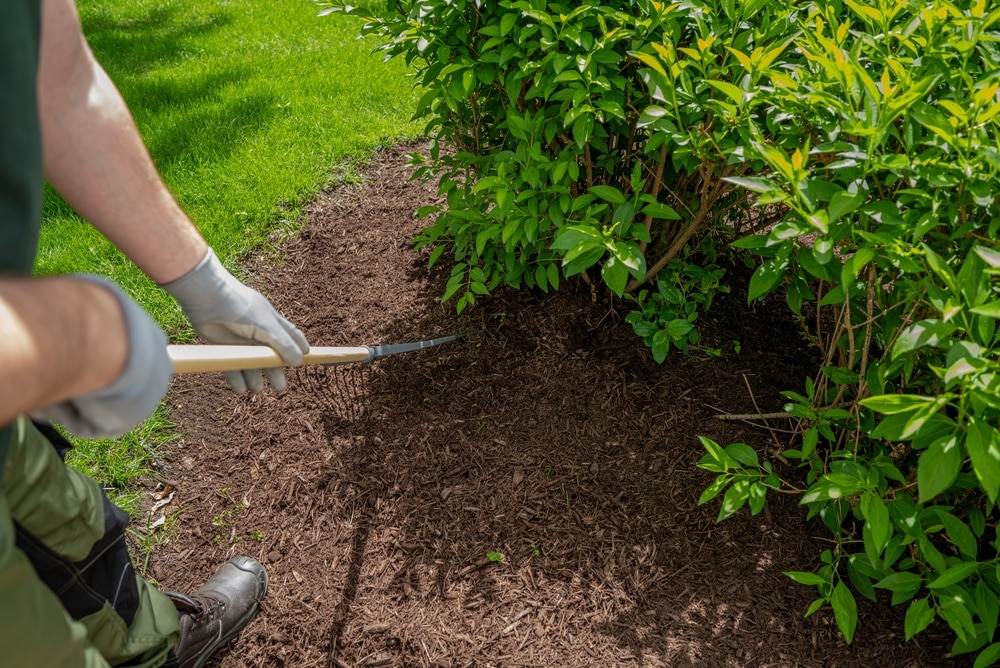
Mulch remains one of the most valuable tools available when landscaping around trees. It helps regulate soil temperatures, conserve moisture, suppress weeds, and improve the overall appearance of planting beds.
However, proper installation is essential. Excessive mulch piled against tree trunks can contribute to moisture-related issues and create conditions that may negatively impact tree health.
FSI Landscape Supply comments, “One of the most common maintenance concerns we see is excessive mulch accumulation around tree bases. Contractors understand the importance of maintaining a visible trunk flare while distributing mulch evenly throughout the bed. Proper application supports both aesthetics and long-term tree performance.”
July heat can place additional stress on landscapes, making mulch particularly valuable during mid-summer conditions.
FSI Landscape Supply adds, “As temperatures rise, mulch functions as a protective layer that helps stabilize soil conditions. Landscapers working on summer enhancement projects often find that refreshing mulch installations delivers immediate visual improvement while supporting moisture retention during the hottest part of the season.”
When sourcing landscape supplies, contractors should select mulch products that complement the surrounding design while meeting the functional needs of the site.
3. Leave the Leaves
Fallen leaves are often viewed solely as debris, but they can provide valuable ecological benefits within tree-centered landscapes. As leaves decompose, they contribute organic matter back into the soil and support natural nutrient cycling.
While excessive leaf accumulation may require management in certain applications, maintaining some organic material within landscape beds can benefit soil structure over time.
FSI Landscape Supply explains, “Professional landscapers increasingly recognize the importance of balancing appearance with long-term soil health. Organic matter contributes to healthier growing conditions beneath trees, particularly in areas where root competition can make plant establishment more challenging.”
The company notes that landscape designs incorporating mulch and natural organic materials often create more resilient growing environments while reducing reliance on frequent soil amendments.
For contractors managing large properties, integrating sustainable maintenance practices can also improve efficiency while supporting landscape longevity.
Landscaping around trees involves more than simply filling empty space beneath a canopy. Successful installations require thoughtful plant selection, proper moisture management, strategic use of mulch, and careful consideration of long-term maintenance requirements.
For landscape professionals working throughout the summer season, opportunities exist to enhance tree-centered landscapes through quality landscape supplies, decorative gravel applications, landscape edging, and carefully planned landscape lighting systems.
FSI Landscape Supply concludes, “The most successful tree-focused landscapes balance visual appeal with practical site considerations. During July, when heat and moisture management become critical factors, contractors can achieve lasting results by combining appropriate plant selections with high-quality mulch and complementary landscape supplies. Thoughtful design choices around mature trees frequently elevate both the aesthetic appeal and functional value of the landscape.”