
The Role of Sand in Stable Paver Installations
When it comes to long-lasting interlocking stone projects, most attention goes to the pavers themselves. But experienced contractors know the real performance comes from what sits beneath and between them. Sand is not just a filler. It is a structural component that directly affects stability, drainage, and long-term durability.
Today, we break down how sand functions across each layer of a paver system, and why getting it right makes the difference between a job that lasts years and one that needs early repair.
Bedding Sand: The Precision Layer
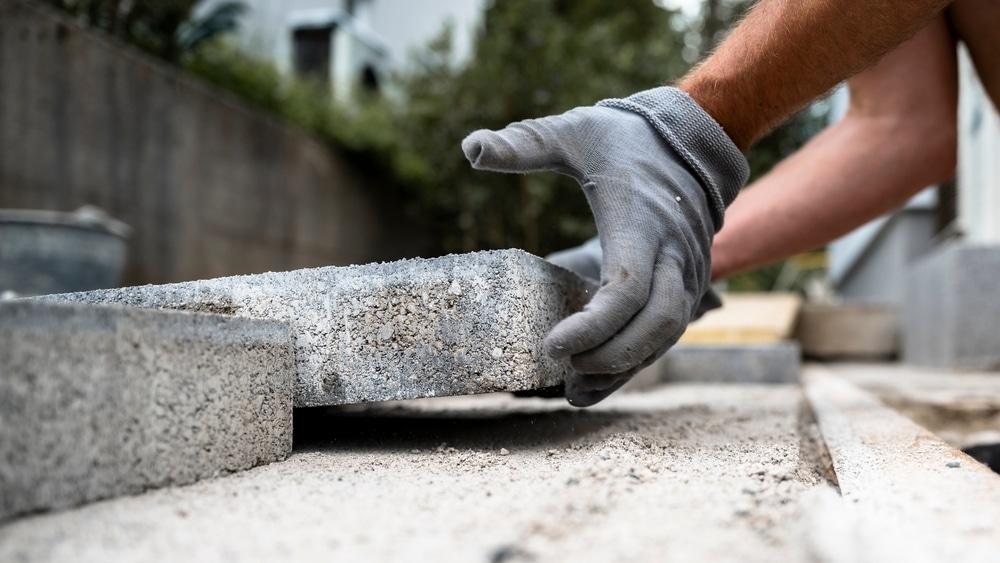
Bedding sand sits directly under the interlocking stone and acts as the leveling course. Its main job is to create a smooth, uniform surface that evenly supports each paver.
A common mistake is treating bedding sand as a thick cushion. In reality, it should be kept to about 1 inch (25 mm) after compaction. Anything thicker increases the risk of shifting and settling. The sand should be screeded carefully to maintain a consistent height across the entire installation.
The type of sand matters here. Concrete sand is the standard choice because of its angular particles. These lock together better than rounded sand, which can lead to movement under load.
One detail that often gets overlooked is pre-compaction. Lightly compacting the base before screeding helps prevent the bedding layer from being unevenly compressed later. Once the pavers are placed, final compaction will lock everything together.
Joint Sand: More Than Just Filling Gaps
Joint sand is what fills the spaces between pavers, but its role goes far beyond appearance. It creates friction between units, preventing lateral movement and distributing loads across the surface.
There are two main types used in the field:
- Regular joint sand (fine, dry sand)
- Polymeric sand (sand mixed with binding agents)
Polymeric sand has become more common because it hardens when activated with water. This helps reduce washout, weed growth, and insect activity. For high-traffic areas or commercial installs, it is often worth the added cost.
That said, the installation technique is critical. If polymeric sand is not properly compacted into the joints, or if excess dust is left on the surface before activation, it can haze the pavers and lead to callbacks.
For contractors working with a paving stone sealer, joint sand selection becomes even more important. Some sealers require fully cured joints, while others interact differently with polymeric materials. Timing and compatibility should always be checked before sealing.
Compaction: The Step That Locks It All Together
Compaction is where the entire sand system starts to perform as intended. Without proper compaction, even the best materials will fail.
There are two key stages:
- Base compaction – Before any sand is added, the granular base must be compacted in layers. This provides the structural support for everything above.
- Surface compaction – After the pavers are laid and joint sand is applied, a plate compactor is used to vibrate the interlocking stone into the bedding layer.
This second step is what forces the bedding sand into voids and pulls the joint sand down between pavers. It creates a tight, interlocking system in which each unit supports the next.
Using a protective pad on the compactor is important to prevent scuffing, especially on textured or premium pavers.
Skipping or rushing compaction is one of the fastest ways to compromise an installation. It leads to uneven settling, loose joints, and reduced lifespan.
Drainage and Sand Performance
One of sand’s most valuable properties is its ability to support drainage. A properly installed system allows water to move through the joints, into the bedding layer, and down into the base.
However, this only works when each layer is built correctly. If the base is poorly graded or fine materials clog the system, water will sit rather than drain. This increases the risk of freeze-thaw damage in colder climates.
Contractors should pay attention to:
- Base material quality and gradation
- Proper slope away from structures
- Avoiding contamination of sand layers with soil or debris
In permeable systems, specialized joint aggregates may replace standard sand, but the principle remains the same. Water movement must be controlled, not blocked.
Long-Term Durability and Maintenance
Over time, sand is exposed to weather, traffic, and environmental factors. Even well-installed joint sand can slowly erode or degrade.
Regular maintenance prolongs the lifespan of the installation. This includes:
- Reapplying joint sand where needed
- Cleaning the surface to prevent buildup
- Inspecting for movement or settling
Applying a paving stone sealer can also improve durability. Sealers help stabilize joint sand, reduce water infiltration, and protect against staining. For clients looking for a lower-maintenance surface, this is often a worthwhile addition.
It is important to note that sealing is not a substitute for proper installation. It enhances performance, but it cannot fix structural issues caused by poor base work or improper sand use.
The Bigger Picture
For landscaping professionals, sand should never be treated as a minor detail. It is a core part of the system that directly affects how interlocking stone performs under real-world conditions.
From the precision of the bedding layer to the locking strength of joint sand and the impact of proper compaction, each step builds on the next. When done right, sand helps create a surface that stays level, drains efficiently, and holds up under years of use.
When done poorly, it becomes the weak point that leads to callbacks and costly repairs.
Understanding and respecting the role of sand is what separates a basic install from a professional one.
If you want your interlocking stone projects to perform as they should, the materials you choose matter just as much as the installation. From the right sand for bedding and joints to compatible options for paving stone sealer, having a reliable supplier makes your job easier and your results more consistent.
Connect with FSI Landscape Supply to get the materials, guidance, and product knowledge you need for your next project. Whether you’re sourcing sand, base materials, or finishing products, our team is dedicated to guiding you toward the optimal solution tailored to your unique application and site requirements.