
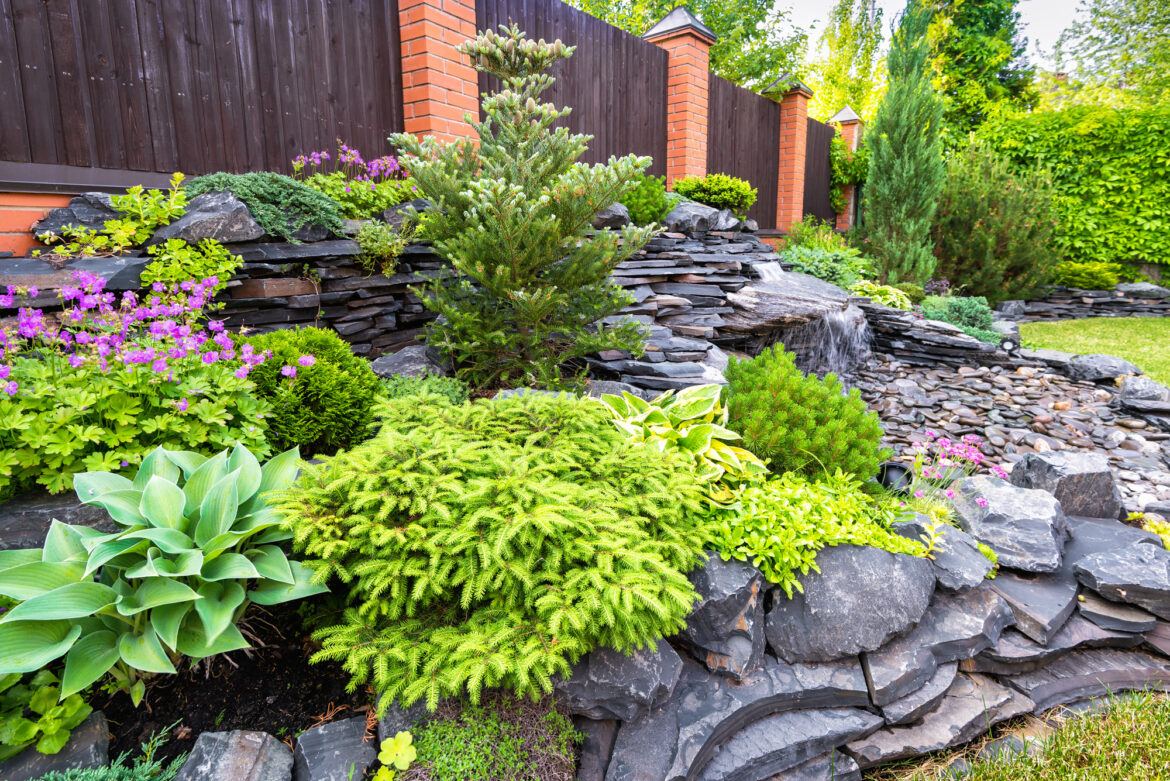
Natural Stone Features That Elevate Spring Landscaping
Spring is when plans turn into projects. Crews are back on site, clients are eager to see results, and timelines are tightening fast. It’s also the season when material choices matter most. The right hardscape elements don’t just frame the planting plan. They anchor it.
Natural stone remains a reliable, high-value choice for spring landscaping. Not because it’s trendy, but because it performs. It adds structure, stands up to weather, and delivers a finished look that improves with time. For contractors focused on durability and long-term client satisfaction, it’s a material that works as hard as the crew installing it.
Defining Structure Early in the Season
After winter thaw, many sites reveal the same issues: soil movement, drainage problems, and softened edges. Natural stone offers immediate structural clarity.
Retaining walls built with armour stone provide strong vertical definition while efficiently managing grade changes. Large-format blocks reduce installation time compared to smaller segmental systems, and they handle freeze-thaw cycles with minimal shifting when properly based. On sloped properties, that stability protects both the landscape design and the client’s investment.
Beyond walls, stone steps and landings establish clear circulation routes before turf and planting beds fully fill in. This helps protect newly installed lawns and reduces maintenance callbacks caused by foot traffic cutting unintended paths.
Spring is also when water management is tested. Integrating aggregate bases beneath patios, walkways, and driveways ensures proper drainage and load distribution. A well-compacted aggregate foundation prevents settling and keeps surface materials aligned through heavy rains.
Armour Stone as a Functional Focal Point
Armour stone is often seen solely as a retaining wall material, but its value extends beyond that. Large, natural blocks can double as seating, edging, and visual anchors within planting beds.
Using armour stone as perimeter definition around feature gardens creates a clean separation between softscape and hardscape. It prevents mulch migration during spring storms and keeps edges sharp without constant re-cutting. For waterfront or rural properties, armour stone also reinforces shorelines and ditches where erosion is a seasonal concern.
From a contractor’s perspective, these oversized pieces reduce the number of individual components needed on site. Fewer units mean fewer joints, less potential movement, and faster installation when equipment access is available.
The natural variation in colour and texture also complements early-season planting. As perennials emerge and trees leaf out, the stone provides contrast and scale. It looks intentional even before the softscape reaches full maturity.
Aggregate: The Hidden Performance Layer
While natural stone features draw attention, aggregate does much of the structural work behind the scenes. In spring landscaping, proper base preparation is critical. Frost heave and saturated soils can quickly undermine poorly built installations.
Using the right aggregate blend for sub-base and bedding layers improves compaction and drainage. Clear stone promotes water movement in areas prone to pooling. Granular A or similar compactable aggregate creates stable foundations for patios and walkways. Matching the aggregate type to soil conditions on site reduces long-term shifting and callbacks.
Exposed aggregate surfaces can also serve as finished features. Pathways constructed with decorative aggregate offer permeability and a softer aesthetic than poured concrete. They’re particularly useful in transitional spaces between formal patios and naturalized planting areas.
In larger landscape designs, aggregate can unify separate zones. Driveways, service paths, and utility corridors built with high-quality aggregate maintain a clean look while supporting heavy equipment traffic.
Natural Stone in Seasonal Transition Zones
Spring projects often involve blending indoor and outdoor living spaces. Natural stone is well-suited for thresholds, outdoor kitchens, fire features, and patio expansions.
Stone slabs and flagstone patios warm gradually in spring sunlight, creating comfortable surfaces earlier in the season compared to some manufactured materials. They also resist surface fading and retain their character year after year.
In freeze-thaw climates, the density of natural stone reduces surface spalling when compared to lower-grade alternatives. When properly installed over a well-compacted aggregate base, stone patios maintain tight joints and level surfaces despite seasonal movement.
Steps and coping made from natural stone offer a finished edge that complements both modern and traditional designs. The material transitions well from the structured hardscape to the surrounding gardens, which is particularly valuable in spring, when planting beds are still filling in.
Erosion Control and Water Management
Spring rainfall exposes weaknesses in grading and drainage. Natural stone can be integrated into practical solutions that still look refined.
Rock swales lined with natural stone channel runoff effectively while blending into the landscape. River stone and larger decorative aggregate prevent soil washout and reduce sediment movement. On properties with downspout discharge issues, stone-filled trenches provide both function and visual continuity.
Armour stone, strategically placed along slopes, stabilizes soil and reduces erosion in high-flow areas. Combined with aggregate backfill and proper geotextile separation, these installations manage water without appearing overly engineered.
For contractors, these features solve common site challenges while adding billable value. Instead of hiding drainage solutions, natural stone allows them to become part of the design.
Long-Term Value for Clients
Spring landscaping projects set expectations for the rest of the year. Clients want installations that look complete immediately but continue to perform over time.
Natural stone offers longevity that supports those expectations. It doesn’t rely on surface coatings or manufactured pigments. Its colour and texture are inherent. As seasons change, the material adapts without losing integrity.
Maintenance is straightforward. Occasional re-leveling of joint material or replenishing aggregate in high-traffic areas is typically all that’s required. Compared to products prone to cracking or fading, natural stone installations often age with character rather than deterioration.
For contractors, that translates to fewer warranty concerns and stronger referrals.
Material Efficiency and Project Planning
Spring schedules move quickly, and projects often unfold in phases. Establishing the stonework early gives the site a clear framework to build around. Armour stone defines grade and anchors key areas. Aggregate creates stable, well-drained foundations. Natural stone surfaces shape how people move through and experience the space.
When these elements are planned from the outset, excavation, base preparation, and installation align with the overall vision. Crews can transition smoothly from structural work to planting and finishing details without disrupting what’s already in place.
Thoughtfully integrated natural stone, armour stone, and aggregate form the backbone of a landscape. As plant material fills in and seasonal colour returns, the stonework continues to provide structure and permanence. Spring is about renewal, but strong landscapes begin with materials that hold their ground year after year.