
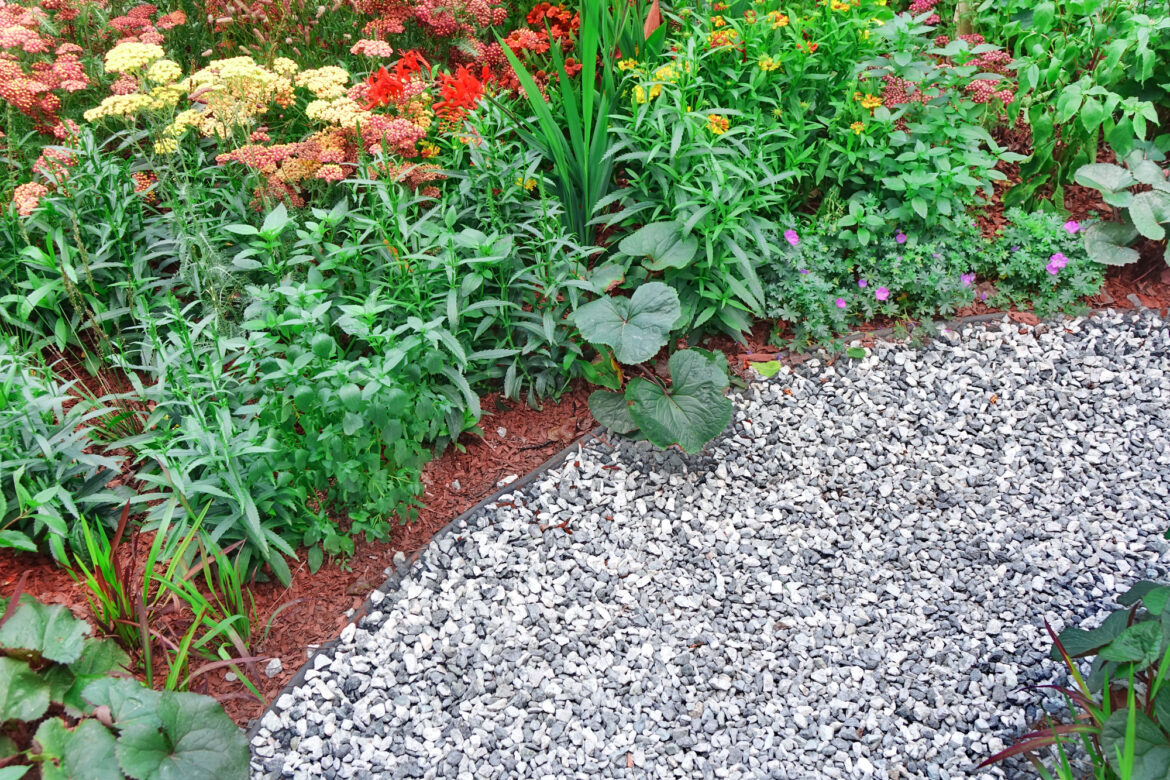
Decorative Gravel Designs That Reduce Spring Maintenance
Spring is when maintenance problems show up fast. Weeds push through bare soil, mulch washes out, and drainage issues that stayed hidden all winter suddenly cost time and money. For landscaping professionals, decorative gravel offers more than a clean look. When installed with intention, it solves several of those seasonal headaches at once.
Below are practical, less-discussed ways decorative gravel installations can reduce spring maintenance while improving performance and curb appeal on residential and commercial sites.
Gravel as a Weed Strategy, Not Just a Cover
Most weed control conversations focus on products. Gravel works best when it’s treated as a system.
The real advantage comes from layering and particle selection. Angular gravel compacts slightly over time, limiting light penetration better than rounded stone. When paired with a properly secured weed barrier and clean base prep, it reduces germination zones rather than just hiding them.
Another overlooked point: gravel discourages organic buildup. Unlike mulch, it doesn’t break down into soil. That means fewer nutrients available for weed seeds that do blow in. For contractors, this translates into fewer return visits for spot spraying or hand-pulling once spring growth begins.
Drainage That Actually Protects Surrounding Materials
Decorative gravel is often praised for drainage, but the benefit goes beyond preventing puddles.
Gravel installations help protect adjacent hardscapes and structures. In spring freeze-thaw cycles, saturated soil expands and shifts. Gravel zones act as pressure-relief areas, allowing water to move vertically rather than laterally into sidewalks, retaining walls, and foundations.
In high-traffic commercial properties, gravel strips between turf and concrete reduce edge erosion. Less erosion means less soil migration onto walkways and fewer cleanup hours after heavy spring rain.
Compared to mulch, which can float, shift, or compact into water-resistant mats, decorative gravel keeps water moving where it should.
Landscape Edging as a Maintenance Multiplier
Gravel without strong landscape edging is a maintenance liability. With it, gravel becomes one of the most stable surface treatments available.
Rigid edging, especially steel or aluminum, locks gravel in place during snowmelt and heavy rain. This reduces migration into turf and planting beds, which is a common spring cleanup issue.
A less obvious benefit: defined edges make maintenance faster. Crews can trim, blow, and clean without constantly redistributing material. On properties with long borders or multiple beds, those minutes add up quickly over a season.
Edging also allows contractors to specify thinner gravel depths without sacrificing containment. That lowers material costs while maintaining performance.
Cleaner Transitions Reduce Seasonal Labor
Gravel excels at transitions. Between turf and planting beds. Between buildings and soil. Between public walkways and private zones.
These transition areas are often the most labor-intensive in spring. Mud splash, mulch runoff, and salt residue collect there. Decorative gravel creates a clean buffer that’s easy to blow off or rinse down.
On commercial properties, gravel perimeter zones reduce staining on building facades caused by wet soil and organic debris. That’s an aesthetic win that also reduces pressure-washing frequency.
Visual Depth Without Plant Dependence
One fresh design advantage is using decorative gravel to add visual depth where plant performance is unreliable.
North-facing beds, tight urban corridors, or areas with poor soil often struggle in spring. Instead of forcing plant material that needs constant correction, gravel provides year-round structure.
Blending gravel sizes or subtle color variations creates texture that doesn’t rely on growth cycles. This reduces replanting, seasonal thinning, and early spring replacement costs.
For contractors managing properties with limited irrigation or inconsistent maintenance schedules, this approach improves consistency without sacrificing appearance.
Gravel vs Mulch in Long-Term Cost Control
Mulch still has its place, but from a maintenance standpoint, gravel is more predictable.
Mulch requires annual refreshes, edge correction, and frequent redistribution after storms. Gravel installations, once dialed in, typically only need minor top-offs and occasional raking.
Another often missed point: gravel doesn’t hide problems. Irrigation leaks, drainage failures, and soil movement show up quickly. That allows contractors to address issues early, rather than discovering them after plant loss or erosion damage.
Designing for Equipment, Not Just Looks
Professional installations should account for how crews work.
Gravel layouts that align with mower decks, trimmer paths, and blower patterns reduce accidental displacement. Straight lines, consistent widths, and defined access points matter more than decorative curves when maintenance efficiency is the goal.
Spring is when these design decisions pay off. Fewer interruptions. Fewer material corrections. Cleaner results with less labor.
The Takeaway for Landscaping Professionals
Decorative gravel isn’t just a low-maintenance alternative to mulch. When designed intentionally, it becomes a tool for controlling weeds, managing water, protecting infrastructure, and streamlining spring operations.
For landscaping contractors, the value is in the details. Base prep. Material choice. Landscape edging. And designing with maintenance in mind from day one.
In an industry where time, labor, and callbacks define profitability, gravel installations that work harder than they look are worth revisiting with a fresh perspective.