
Natural Stone Features That Prepare Properties for Winter
Winter performance begins well before the first snowfall. For landscaping contractors, fall is an important window for correcting drainage, reinforcing slopes, and protecting exposed soil before freeze–thaw cycles begin. When properly specified and installed, natural stone can address these practical concerns while adding lasting structure and visual interest to residential and commercial properties.
1. Stabilize Slopes with Armour Stone
Sloped sites become more vulnerable during late fall, when heavy rain can saturate soil and vegetation begins to lose some of its protective density. Once winter arrives, repeated freezing and thawing can contribute to soil movement, surface erosion, and drainage problems.
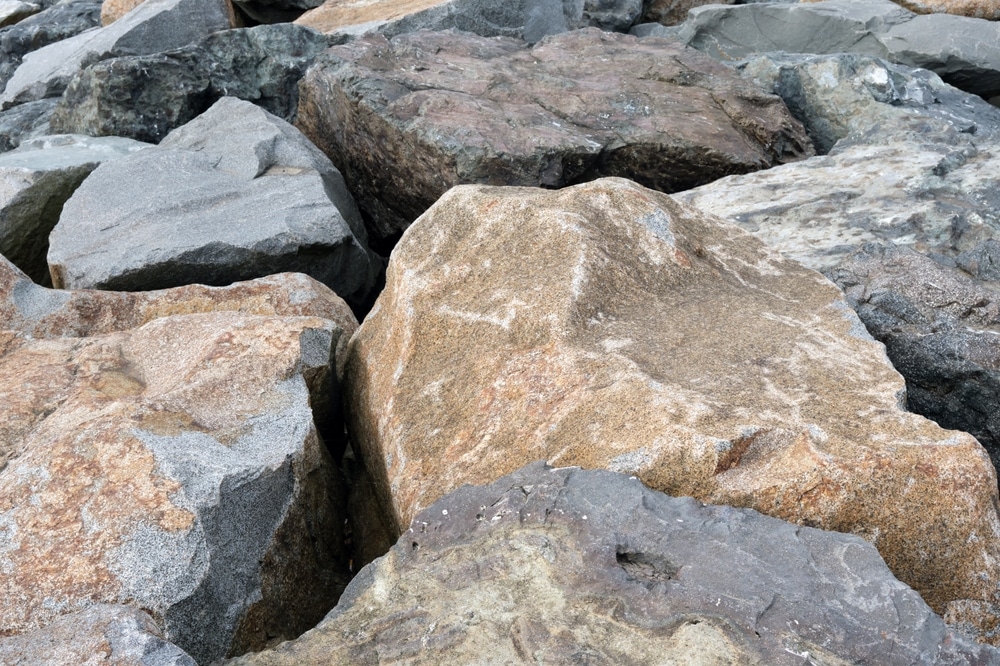
Armour stone can be used to create retaining features, reinforce grade changes, and slow water travelling across a slope. However, the stone itself is only one part of the system. Contractors should also consider excavation depth, base compaction, drainage stone, geotextile fabric, and a suitable backfill material.
A granular base provides a stable bearing surface, while clear stone placed behind the installation helps relieve hydrostatic pressure. Where required, a drainage outlet can direct excess water away from the retained area. These concealed components are especially important in cold climates because trapped moisture can expand when frozen and place pressure on the stonework.
2. Create Stone-Lined Drainage Routes
Instead of allowing runoff to find an uncontrolled path across a property, contractors can use natural stone to define where the water should travel. A stone-lined swale or dry creek bed can collect runoff from higher elevations and move it toward an approved drainage point.
This approach is particularly useful around commercial landscapes, large lawns, and properties with long rooflines or expansive hardscaped areas. It can also transform a functional drainage channel into an intentional landscape feature.
Rounded river rock may create a softer appearance, while angular stone can produce a more structured design. Beneath the visible material, the subgrade must be properly shaped so water continues moving rather than pooling. Geotextile fabric can help separate the stone from the underlying soil and limit material migration.
3. Protect Vulnerable Soil with Decorative Gravel
Bare soil around foundations, utility areas, downspout outlets, and narrow side yards is susceptible to erosion. Decorative gravel provides a durable surface layer that helps protect these areas from direct rainfall and concentrated runoff.
Unlike organic ground coverings, gravel does not decompose, float away as easily during intense rainfall, or require seasonal replacement. Its effectiveness, however, depends on more than spreading stone across the surface. Contractors should establish the correct depth, prepare the grade, install suitable edging, and address weed control according to site conditions.
Decorative gravel can also reduce mud transfer onto walkways and entrances during wet fall weather. On commercial properties, this can make service corridors, equipment areas, and low-traffic landscape zones easier to maintain through winter.
4. Reinforce High-Impact Drainage Areas
Downspouts and drainage outlets can release water with enough force to displace topsoil, mulch, and small aggregates. A splash pad made from larger natural stone can help absorb this impact and spread the flow over a wider area.
The design should account for where the water goes after striking the stone. If the surrounding grade traps runoff, the feature may simply relocate the problem. A slight pitch away from the building, combined with appropriately sized drainage stone, can help protect foundations and nearby planting beds.
Contractors should inspect these areas before winter to identify sediment deposits, exposed soil, and displaced materials—all signs that water is moving with excessive force.
5. Use Stone to Manage Snow-Storage Zones
Snow-storage planning is often overlooked during landscape construction. Plowed snow can place considerable weight on planting beds, edges, and slopes. As it melts, it may also release concentrated water carrying salt, grit, and debris.
Placing armour stone around designated snow-storage zones can protect vulnerable grades and create a visible boundary for equipment operators. Decorative gravel may be appropriate in areas where repeated snow piling would compact mulch or damage delicate planting.
Stone selection should still account for snow-clearing practices. Features near parking lots and drive lanes must be positioned where they will not interfere with plow movement or become hidden collision hazards beneath accumulated snow.
6. Make Fall Inspections Part of the Installation
Even well-built stone features benefit from a pre-winter inspection. Contractors should look for settlement, open joints, displaced gravel, clogged drainage outlets, and signs of water bypassing the intended route. Minor corrections made in fall can prevent larger repairs after spring thaw.
Natural stone works best when it is treated as part of a complete erosion control and landscape drainage strategy. Armour stone supplies mass and structural definition, while decorative gravel protects surfaces and supports controlled water movement. Together with thoughtful grading, base preparation, and drainage planning, these materials can help properties enter winter with stronger soils, better water management, and a polished landscape design.