
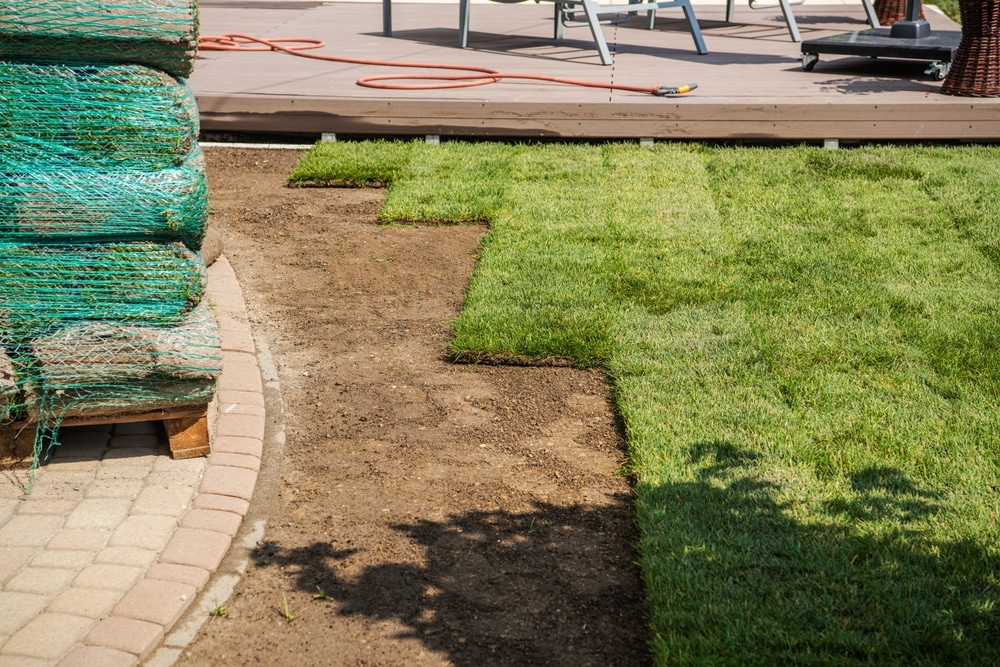
Sod Installation Tips for High-Traffic Summer Areas
Sod installation in high-traffic areas during summer poses specific challenges. Heat, foot traffic, and rapid moisture loss all work against successful establishment. For landscaping professionals, the difference between a surface that thrives and one that fails often comes down to preparation and early care.
Here’s how to approach it with consistency and long-term performance in mind.
Start with Soil That Can Handle Stress
In high-traffic zones, the soil beneath the sod matters just as much as the sod itself. Compacted or poorly structured soil will limit root growth and reduce durability almost immediately.
Before anything goes down, loosen the existing ground to a depth of at least 4-6 inches. This isn’t just about making it easier to lay sod. It creates space for roots to penetrate and water to move properly.
Blending in quality topsoil helps improve structure, especially in areas where native soil is heavy clay or overly sandy. The goal is balance. You want enough drainage to prevent pooling, but enough retention to keep moisture available between watering cycles.
In some cases, adding sand can help improve drainage, but it should be done carefully. Straight sand layers can create separation issues if not mixed properly with the underlying soil. A well-integrated mix of sand and topsoil creates a more stable base that won’t shift under pressure.
Grade for Use, Not Just Appearance
Grading is often treated as a cosmetic step, but in high-traffic areas, it directly affects durability.
Subtle slopes should direct water away without creating runoff channels that erode the surface. Low spots will collect water, weaken the sod, and become failure points under repeated use.
Pay attention to transition zones like walkways, patios, and entry points. These are the areas that see the most wear. Slightly firming these zones during grading helps reduce future settling.
Roll Before and After Installation
Rolling is one of the most overlooked steps in sod installation, especially in busy commercial or residential spaces.
Before laying sod, lightly roll the prepared soil. This helps identify soft spots and ensures a consistent base. If you skip this step, you may not notice uneven areas until after installation, when it’s harder to correct.
After the sod is installed, rolling again improves contact between the sod and the soil. Good contact is critical for root establishment. Without it, air pockets form, roots dry out, and sections begin to lift under foot traffic.
Use a moderate-weight roller. Over-compacting at this stage can undo the benefits of your soil prep.
Water With Purpose, Not Just Frequency
Summer installations demand aggressive watering, but more water isn’t always better.
Right after installation, sod needs deep saturation. The water should reach through the sod layer and into the topsoil beneath. This encourages roots to grow downward instead of staying shallow.
For the first 10 to 14 days, keep the sod consistently moist. That usually means multiple light watering cycles throughout the day, especially during peak heat. The surface should never dry out completely.
Once roots begin to establish, shift the strategy. Reduce frequency and increase depth. This trains the sod to rely on deeper moisture, which improves resilience in high-traffic conditions.
Watch for signs of overwatering as well. Constantly soggy soil weakens root systems and makes the surface more susceptible to damage.
Control Traffic Early
It’s unrealistic to expect zero traffic in many projects, especially in commercial settings. That said, early control makes a significant difference.
The first two weeks are critical. During this time, the sod is relying almost entirely on surface moisture and hasn’t anchored itself yet. Even light foot traffic can shift pieces or break early root connections.
If the area must be used, consider temporary pathways or access routes. Directing movement instead of trying to eliminate it completely is often more practical.
For areas that will always see heavy use, reinforcing the soil structure during prep becomes even more important. This is where a well-balanced mix of landscaping supplies, including stabilized topsoil blends, can improve long-term performance.
Focus on Root Establishment, Not Just Green Color
A common mistake is judging success based on how green the sod looks. Fresh sod can appear healthy even before roots have established.
Instead, check resistance. After about two weeks, gently lift a corner of the sod. If it resists pulling, roots are beginning to anchor. If it lifts easily, it needs more time and likely better soil contact or watering adjustments.
Root establishment typically takes 2 to 3 weeks in summer conditions, but high heat can slow the process if not managed properly.
Adjust for Heat Load and Surface Use
High-traffic areas often coincide with high heat exposure, especially in open commercial spaces or near hardscapes.
Heat radiating from concrete, asphalt, or stone can dry out sod faster than expected. These edges need extra attention during watering cycles.
In some cases, adjusting the soil mix slightly with additional sand can help improve drainage near these surfaces, preventing heat-induced stress from turning into root rot.
Think Beyond Installation Day
The work doesn’t stop once the sod is down. Early maintenance determines whether the installation holds up under pressure.
Mowing should begin only after the sod is firmly rooted. Cutting too early can pull up sections and disrupt establishment. When mowing, ensure your blades are sharp and never cut off more than one-third of the grass height at a time.
Fertilization should be timed carefully. Applying nutrients too early can stress new sod, especially in high heat. Wait until roots are established, then support growth with a balanced program.
High-traffic summer installations demand more precision than standard sod jobs. Strong soil preparation, proper use of sand and topsoil, controlled watering, and careful early use all work together to build a surface that can handle wear.
For landscaping professionals, these steps aren’t extra. They’re what separate a short-term install from a long-lasting result.