
How Spreading Patterns Shape the Overnight Performance of Road Salt
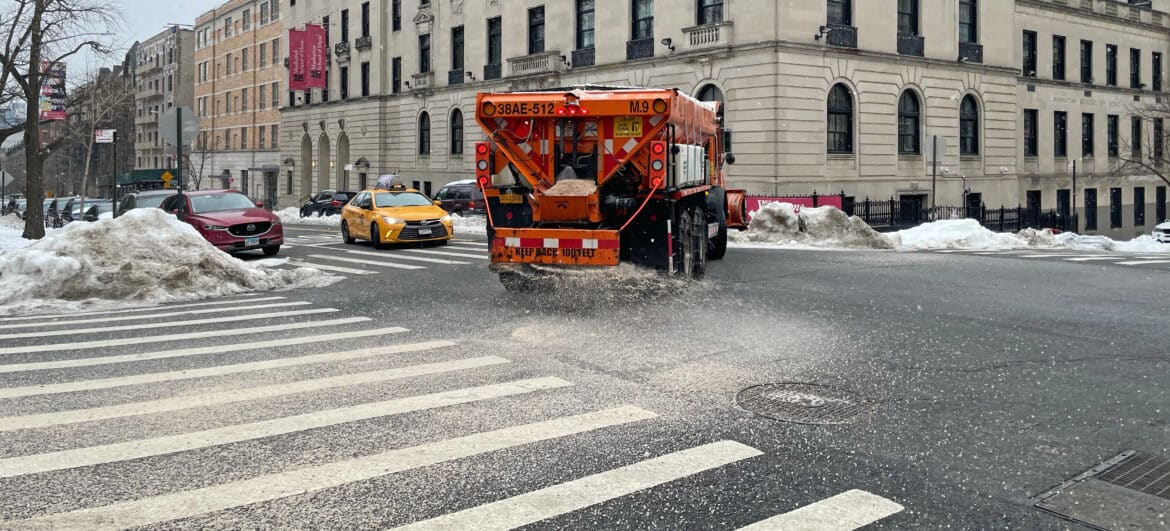
When temperatures fall after sunset, the performance of road salt depends on more than the weather. The patterns used to apply bulk salt and other de-icing products influence melt longevity, brine stability, and the likelihood of black ice forming overnight. Different patterns place different demands on the material, and those demands shape which products deliver the strongest results in real-world conditions.
The six patterns below are commonly used across roads, parking lots, commercial properties, and municipal sites. Each one interacts with road salt in its own way, and understanding those interactions helps clarify why material quality, consistency, and product type matter so much when the goal is reliable overnight melt.
1. V Pattern: Consistency Is Everything
The V pattern is widely used on long, straight roadways. Material lands heavier in the center and feathers outward toward the shoulders. For this pattern to work well, the road salt itself must be consistent.
Uneven granule size can create bare streaks that refreeze early. Larger chunks drop too close. Smaller particles scatter beyond the intended fan. That inconsistency matters most overnight, when temperatures fall fast, and thin spots lose brine first.
This is why many crews prefer screened bulk salt. Uniform sizing supports predictable melt, and that helps the V pattern maintain traction well past sunset.
2. Perimeter First: Melt Longevity Takes the Lead
For large lots and open areas, many contractors put down a perimeter ring of salt before treating the interior. That outer band acts like a containment zone, keeping meltwater from drifting off the edges and refreezing into wide sheets.
In this pattern, longevity matters more than speed. Treated road salt or enhanced de-icing products help the perimeter stay active longer, even as temperatures fall overnight. The stronger the brine durability, the better the protection against black ice creeping in from the boundaries.
Customers using this method often ask for salt that resists scatter and holds to pavement, which is why we stock both treated and untreated options to match their approach.
3. Crosshatch: Even Coverage Depends on Reliable Flow
Crosshatching covers an area in two directions, usually north-south and then east-west. This reduces thin coverage zones and creates a more stable melt layer.
For this pattern to perform well, the bulk salt must flow reliably. If material clumps, bridges, or releases unevenly, the crosshatch loses its advantage. Moisture-controlled, properly stored road salt helps contractors maintain the smooth output that makes this pattern effective. Since crosshatching is often used in high-priority zones, crews tend to prefer products with strong, sustained melt power.
4. Wind Compensation: Adhesion Matters
Open sites, elevated roadways, and large lots often call for a wind-compensated spread. Instead of a perfect left-right fan, operators aim slightly upwind so salt lands where it is supposed to instead of drifting away.
Here, product selection makes a clear difference. Treated and pre-wetted de-icing products adhere better and lose less material to bounce and blow off. For customers working in consistently windy areas, these products help protect coverage integrity and reduce overnight refreeze caused by bare patches.
5. Center Out Pattern: Ideal for Wide, Open Surfaces
Some crews start at the center of a large lot or drive and work outward, creating a melt zone that radiates from the middle. This approach relies on the material holding melt strength across the entire spread width.
Wide pattern performance depends on evenly coated granules and strong, low-temperature melt power. Many teams choose enhanced blends or liquids to support this approach. Our role as a supplier is to make sure they have access to bulk salt that handles broad distribution without breaking down under traffic.
6. Hot Spot Reinforcement: Where Material Strength Shows
Every site has trouble zones. Shaded patches, dips that collect runoff, tight corners where slush compacts, or entrances where traffic grinds surface moisture into slick layers. Crews reinforce these problem areas with extra passes or heavier localized coverage.
Hot spot reinforcement puts material quality front and center. Contractors often prefer higher purity salt, low temperature blends, or specialty de-icing products for these zones. The goal is simple: stop thin patches from refreezing into black ice overnight. As a supplier, offering products tailored for extreme conditions helps customers treat these high-risk areas with confidence.
How Patterns Connect to Product Decisions
Patterns affect how evenly salt lands, how long it stays active, and how quickly it forms brine. Materials differ in:
- Purity
- Granule size
- Residual performance
- Moisture content
- Additives and coatings
When contractors understand how spreading patterns interact with these material traits, they choose road salt and bulk salt that support their strategy rather than working against it.
Our job as a supplier is not to tell them how to spread salt. It is to help them get the best performance out of the patterns they already use. That means stocking reliable bulk salt, offering high-performing de-icing products, and explaining how different materials hold up under different real-world spreading conditions.
Final Word
Overnight refreezing is shaped by both temperature swings and the way road salt is applied. Patterns such as V spreads, perimeter bands, crosshatching, wind compensation, center out coverage, and targeted reinforcement each place distinct demands on bulk salt and de-icing products. Because melt longevity and brine stability depend so heavily on material quality, selecting the right product becomes just as important as the method used on-site.
For contractors preparing for temperature drops and long nights, dependable materials make all the difference. To source high-quality road salt, bulk salt, and de-icing products tailored to real-world winter conditions, connect with FSI Landscape Supply.