
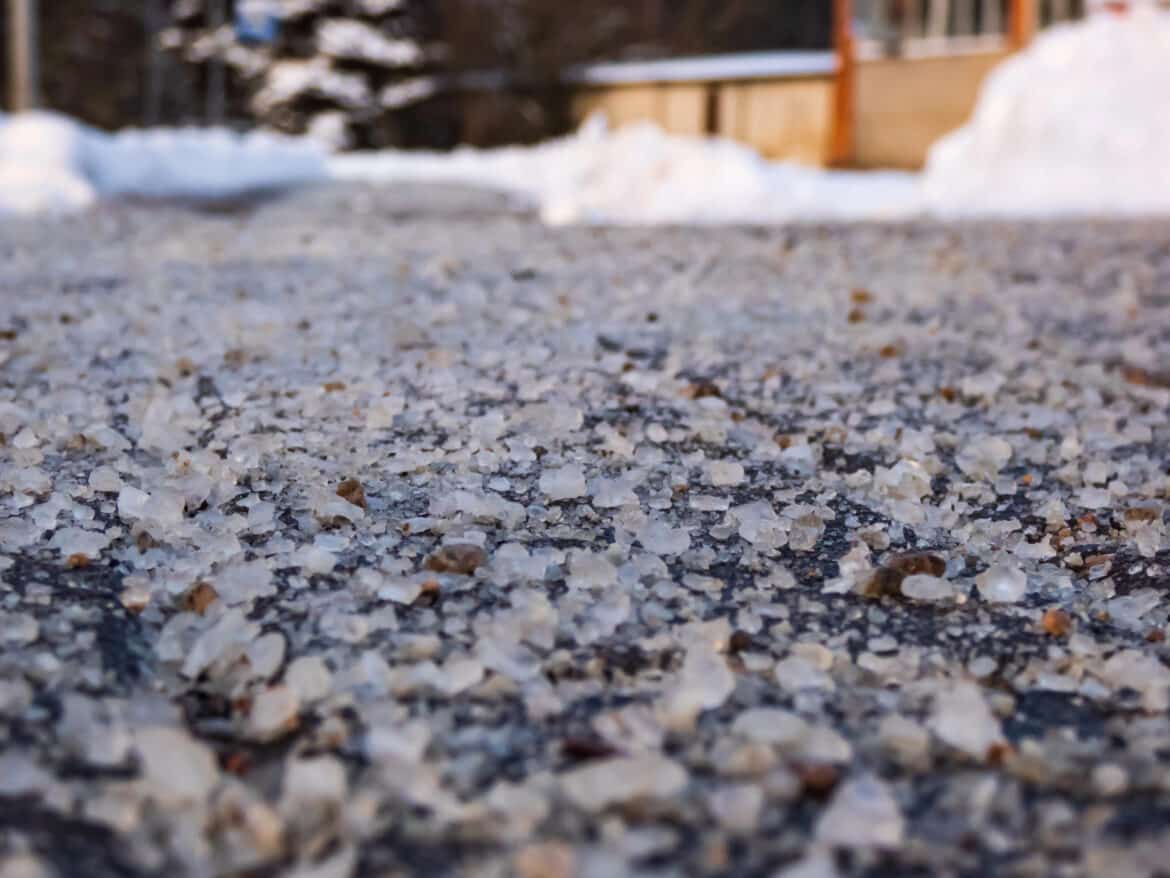
Road Salt Placement Mistakes That Reduce Melt Power Late in the Season
As winter drags on, many crews notice a familiar problem. Road salt that worked fast in December starts feeling sluggish by January and February. Storms hit harder, ice sticks longer, and the same volume of bulk salt seems to deliver less melt power with each application. Weather matters, of course, but placement mistakes play a bigger role than most teams realize. How you distribute de-icing products determines how efficiently they bond with pavement, how well they resist bounce and scatter, and how long they stay active in late-season conditions.
Below are the most common placement mistakes that drain melt performance and how to fix them before the next storm hits.
1. Wind Drift: Letting Road Salt Blow Off Target
A spreader set too wide or running in high winds without mechanical adjustments wastes material and weakens your melt pattern. Late in the season, winds tend to be sharper and more unpredictable. Crews sometimes respond by simply applying more bulk salt, hoping higher volume will make up for lost coverage. Instead, much of that material drifts into gutters, medians, and shoulders. Once road salt lands off target, it stops doing its job.
The fix is all about control. Inspect spinner speed before each route, especially after freezing nights when the equipment stiffens. Narrow the pattern during high wind events and lower the drop height so de-icing products stay close to the pavement. A few placements saved per minute add up to measurable improvements when storms stack up late in the year.
2. Corner Piling: Building Mounds That Never Melt Right
Intersections and tight turns often get over-salted. Operators slow down, the spinner keeps running, and material stacks at the inside corner. Those piles may look reassuring, but they do not melt efficiently. Salt piled too thick forms a crusted top layer that shields the inner product from moisture. If meltwater cannot move through the pile, the product never activates as designed.
Late in the season, when temperatures swing above and below freezing on the same day, corner piles become even less effective. They melt a little, freeze again, and eventually become compacted blocks that no longer provide consistent melt across the traffic path.
The solution is precision. Reduce the application rate when entering turns, and make sure the spreader narrows the distribution band automatically or manually. Even coverage is the goal. If a corner truly needs extra coverage due to shade or heavy traffic, it is better to apply a controlled second pass than to build a large mound that barely melts.
3. Moisture Exposure: Letting Bulk Salt Lose Its Punch Before It Hits the Road
Wet salt is weak salt. When bulk salt absorbs excess moisture before application, granules clump, bridge inside the hopper, and lose their ability to disperse cleanly. More importantly, moisture dissolves the outer layer of each crystal. That means some of your road salt activates early, long before it reaches the pavement.
Late-season temperature swings create condensation in storage bins. Open piles exposed to rain, sleet, or even warm fog degrade faster than crews expect. Once the product gets damp, you lose accuracy and melt power in the same shift.
To prevent this, protect storage piles with covers and keep bins aerated. Train teams to test moisture on site by grabbing a handful of salt before loading. If they feel clumping, they know they need to break and dry the material before spreading. De-icing products only work at full strength when they stay dry right up until the moment they hit the road.
4. Overlapping Passes: Doubling Up Without Meaning To
Operators often make overlapping passes to ensure coverage, but late in the season, that habit eats through inventory and reduces effective melt. When two or three lanes of heavy overlap occur, the pavement receives more road salt than needed. Heavy concentrations melt fast at first, but once the initial layer is gone, the rest simply scatters or is pushed aside by traffic. The product never gets a chance to do its job.
Use clear route planning and consistent visual landmarks to create clean, efficient passes. Modern controllers with GPS feedback help operators avoid over-application, but even without upgraded tech, a simple training refresh reduces overlap. The more accurate the path, the stronger the melt performance.
5. Ignoring Pavement Temperature
Even perfect placement cannot fix a mismatch between product and pavement temperature. Many crews look only at air temperature, but pavement can stay far colder, especially late in the season when the ground never fully warms between storms. If pavement sits below a salt’s effective range, the product works more slowly and may not bond as intended.
Encourage teams to carry handheld infrared thermometers. Once they know true pavement temperatures, they can adjust placement rate or choose alternative de-icing products to maintain efficiency.
Why Placement Precision Matters Most Late in the Season
By late January, winter crews have already worked through dozens of storms. Equipment is worn, storage piles are stressed, and operators are tired. Small placement mistakes that felt harmless in early winter add up to major performance losses later on. Precision is how you reclaim melt power.
When you control wind drift, prevent corner piling, protect bulk salt from moisture, avoid unnecessary overlap, and match application to pavement temperature, you stretch every ton of road salt further. Melting becomes faster. Routes become safer. Crews use less material without sacrificing performance.
Late-season storms are tougher, but consistent, accurate placement gives you the advantage.
Winter is long, but you do not have to face it alone. Reach out to FSI Landscape Supply for dependable bulk salt and trusted de-icing products that help you maintain clear, safe routes all season.