
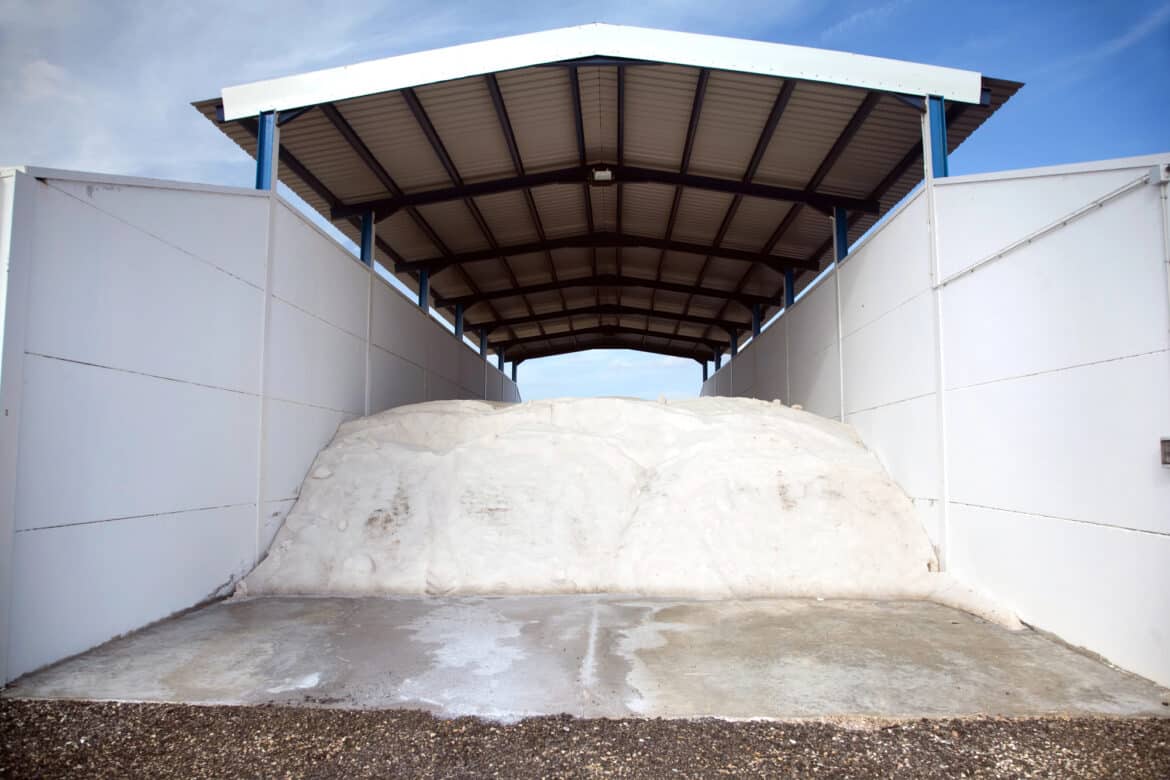
Inside the Yard: How Contractors Are Rethinking Road Salt Storage This Season
As winter creeps closer, professional landscapers and contractors are taking a hard look at how they store and handle road salt. With bulk materials arriving early and demand spiking mid-season, the way you manage bulk salt can make or break your snow operation.
This year, more contractors are rethinking their approach—not just to cut losses, but to stay compliant and efficient. Here’s what the smart crews are doing to protect their de-icing products, prevent clumping, and keep their salt yards running tight all winter long.
Why Salt Storage Matters More Than Ever
Bulk salt isn’t cheap. And with supply chain delays still lingering in parts of the country, having a reliable reserve is key. But suppose that reserve gets wet, contaminated, or washes away in the rain. In that case, you’re not just out of product—you’re out of money and potentially out of compliance.
Proper storage is the only way to:
- Prevent clumping and freeze-ups
- Reduce runoff and contamination risks
- Preserve the effectiveness of de-icing products
- Avoid violations or local fines
In other words: storing salt correctly isn’t just about keeping it dry. It’s about keeping your business moving.
Top Storage Strategies That Work
1. Covered and Contained: The Basics
The most crucial move? Get your road salt under cover. That could mean a permanent structure, a hoop building, or a temporary tarp—just make sure it fully protects the pile from rain and snow.
Even better, store it on an impermeable surface like asphalt or concrete. This prevents salt from leaching into the soil or stormwater systems.
Pro tip: Build a berm or low curb around the pad to contain any spilled material and make cleanup easier.
2. Keep It Dry, Not Just Out of the Rain
Moisture is the enemy. A little dampness turns bulk salt into a solid block. A saturated pile? Useless—and unsafe for your gear.
Ventilation is key. If you’re using a tarp or tent-style setup, leave room for air circulation. Condensation inside a poorly ventilated structure can lead to internal moisture buildup even if it’s dry outside.
And always stack your salt with a slight peak in the center. This helps shed any water and prevents pooling.
3. Rotate Inventory Like a Pro
Don’t let old salt sit at the bottom of the pile year after year. Use a “first in, first out” system to cycle through your material evenly. This avoids hard-packed buildup and ensures all de-icing products are fresh and effective.
Keep an eye on pile condition, too. If the salt looks discolored, feels overly hard, or smells musty, it may be contaminated or compromised.
Preventing Product Loss
You lose more bulk salt in the yard than you do on the road—especially when loading in a rush. Here’s how to cut waste:
- Use a loader with a scale to avoid overloading trucks (and wasting salt).
- Sweep often. Recover spilled material before it becomes runoff or debris.
- Train your crew to load smart and stay off the pile when unnecessary.
A sloppy yard costs money. A clean, organized yard keeps you in control.
Stay Compliant, Stay Ahead
More municipalities are cracking down on improper salt storage. Fines vary widely depending on your location and the severity of the violation—but they can add up quickly—especially if runoff contaminates stormwater systems.
To stay in compliance:
- Know your local regulations on salt and de-icing products
- Document your storage methods and site improvements
- Store at least 100 feet from water sources when possible
- Install containment berms or drainage solutions if required
Handling Tips That Save Time and Equipment
How you move your road salt matters just as much as where you store it.
- Use treated salt to reduce bounce and scatter on pavement
- Pre-wet during loading to increase adhesion and reduce application rates
- Inspect loaders daily to avoid hydraulic leaks or mechanical breakdowns mid-storm
If you’re blending de-icing products, do it under cover and keep clear records. Cross-contamination between materials can reduce effectiveness and create application headaches.
Future-Proof Your Operation
Some contractors are going a step further—investing in permanent fabric buildings, sealed bins, or liquid brine tanks to better manage de-icing products long-term. These setups offer:
- Better material control
- Faster loading
- Reduced environmental impact
- Greater compliance confidence
The upfront cost is real, but so is the payoff. Contractors with tight, well-managed yards win more bids, attract better clients, and sleep easier when the snow hits.
This season, don’t let your bulk salt storage be an afterthought. The proper setup will protect your investment, your equipment, and your reputation. Whether you’re running a small snow crew or managing multiple yards, small upgrades now can lead to significant savings and fewer headaches when the pressure’s on.
Rethink your yard. Rethink your strategy. Stay ready.